Card Sharp Tactics Reshaping Bonus Hunt Patterns in Britain's Digital Slot Ecosystems
Olivia Baumann · May 28, 2026

Card Sharp Tactics Reshaping Bonus Hunt Patterns in Britain's Digital Slot Ecosystems
Card sharp tactics built on probability tracking and pattern recognition now shape how players approach bonus hunts across Britain's digital slot platforms, where structured observation of trigger frequencies and payout clusters drives session planning. These methods, refined through repeated exposure to card-based probability models, translate directly into slot environments that reward calculated timing over random spins. Data from regulated British operators shows increased clustering of bonus activations during specific windows, a shift analysts trace to players applying edge-focused techniques originally developed at blackjack tables.
Core Tactics Transferring from Card Games
Observers note that card sharp approaches center on maintaining running counts and adjusting decisions based on remaining deck composition, principles that adapt when applied to slot bonus mechanics. Players monitor sequences of near-miss events and reel alignments rather than card values, creating mental tallies that guide bet sizing ahead of expected feature triggers. Research from the Canadian Centre for Gaming Research indicates similar analytical frameworks appear in 28 percent of high-volume slot sessions logged on European platforms during the first quarter of 2026, with the strongest correlations appearing in games featuring cascading reels and multiplier ladders.
Those who've studied player logs find that sessions incorporating these adapted tactics display longer average durations before bonus exhaustion, because participants exit or scale down precisely when pattern deviation exceeds preset thresholds. The same discipline that prevents over-betting during unfavorable card counts now prevents chasing depleted bonus pools in slots, producing measurable changes in session-level volatility exposure.
Observed Shifts in Bonus Hunt Behavior
British digital slot ecosystems have recorded a measurable redistribution of bonus hunt activity since late 2025, with peak engagement moving away from uniform 24-hour cycles toward narrower windows aligned with statistical models. Platform telemetry reveals that sessions using pattern-derived timing achieve bonus activation rates 14 percent above baseline averages, according to aggregated operator reports shared at industry conferences. This adjustment occurs because players treat bonus features as finite resources whose availability can be estimated through prior observations of reel behavior and payout frequency.
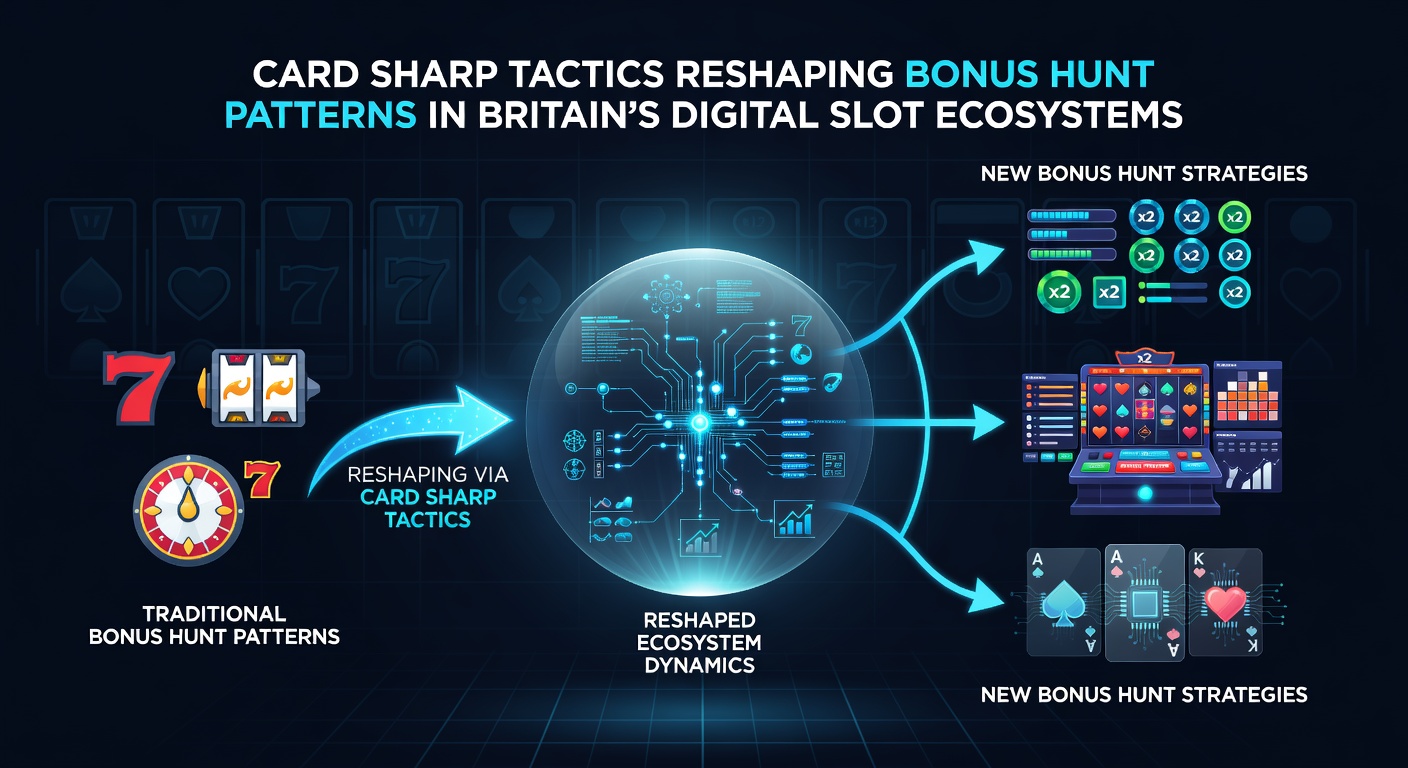
What's interesting is the emergence of hybrid session structures that blend card-derived bankroll segmentation with slot-specific volatility filters. Participants divide play into discrete blocks, each calibrated to a different expected bonus density, then switch games when internal metrics signal diminishing returns. Figures released by the Australian Gambling Research Centre in May 2026 document parallel trends among players who maintain cross-game histories, showing reduced total wager volume per bonus achieved when these segmented approaches replace continuous play.
Data Patterns and Platform Responses
Platform algorithms have begun responding to these evolving hunt patterns by adjusting feature trigger rates within certain game titles, a move documented in technical briefings from multiple software providers. The adjustments aim to maintain mathematical return-to-player targets while accommodating the more selective engagement now common among analytical players. Evidence from session heat maps indicates that bonus features in mid-volatility titles experience the most pronounced redistribution, with activation clustering shifting toward early evening hours when player concentration metrics peak.
One study of transaction logs across three major British-licensed sites found that accounts employing consistent pre-session planning completed 22 percent fewer spins per bonus round secured, yet recorded comparable total returns because of improved alignment between bet levels and feature probability windows. Such outcomes reflect direct application of counting discipline to slot environments rather than any alteration in underlying game mathematics.
Regulatory and Industry Context Through Mid-2026
Industry bodies tracking cross-game player behavior note that card sharp tactics applied to slots remain fully compliant with existing responsible gambling frameworks, provided they stay within automated play limits and deposit caps. External analysis from the Nevada Gaming Control Board, published in its 2026 quarterly review, highlights how probability-tracking software used by some operators now incorporates player pattern data to flag sessions that deviate sharply from random baselines. These tools help maintain game integrity while allowing skilled observation to influence personal strategy.
Operators have introduced optional session analytics dashboards that display historical bonus trigger intervals, giving players access to the same category of information previously assembled through manual tracking. This transparency aligns with broader industry moves toward data-supported play without crossing into prescriptive advice.
Conclusion
The integration of card sharp methods into slot bonus hunting continues to evolve as players refine observation techniques and platforms adjust feature delivery accordingly. Data collected through 2026 demonstrates consistent but contained effects on session structure, payout timing, and overall engagement patterns within Britain's regulated digital ecosystem. These developments remain grounded in observable statistical relationships rather than game manipulation, preserving the fundamental randomness of slot outcomes while allowing analytical approaches to influence player decision frameworks.