Dealer's Full Reveal: Double Exposure Blackjack Rules, Edges, and UK Slot Pairings
Olivia Baumann · Mar 25, 2026
Dealer's Full Reveal: Double Exposure Blackjack Rules, Edges, and UK Slot Pairings
Unpacking the Full Reveal in Double Exposure Blackjack
Double Exposure Blackjack stands out because the dealer flips both hole cards face up right from the start, giving players a clear peek at what they're up against, yet this transparency comes with built-in trade-offs that shift the game's dynamics. Casinos introduced this variant years ago to spice up traditional play, and it gained traction in both land-based floors and online platforms where quick decisions matter. Players often notice how knowing the dealer's hand changes every choice from hit to stand, although rules adjust to keep things balanced for the house.
What's interesting is that this full reveal mechanic traces back to the 1970s in Las Vegas casinos seeking fresh twists on the classic 21 game, and today it thrives in digital formats tailored for mobile sessions. Data from industry trackers shows participation spiking during promotional periods, especially when paired with slot bonuses, since the game's pace suits short bursts between spins.
Core Rules That Define the Game
In standard Double Exposure, the dealer reveals both cards immediately after the deal, so players see the full hand before acting; this eliminates guesswork on bust risks but introduces penalties like player blackjacks paying even money instead of 3:2, and ties typically going to the dealer. Dealers hit on soft 17 in most versions, while players can double down on any two cards except when the dealer shows an ace or ten; splitting pairs remains allowed up to three times, but aces split just once with no resplits.
But here's the thing: late surrender options appear in some tables, letting players fold after the reveal for half their bet, and insurance bets vanish entirely since the dealer's blackjack shows upfront. Take one common setup where the dealer stands on all 17s; players find doubling restricted on 9s and 11s against certain dealer cards, streamlining choices yet demanding sharper strategy. Observers note these rules vary slightly by operator, with European versions sometimes allowing re-doubling after splits.
- Both dealer cards face up from the initial deal.
- Player blackjack pays 1:1, not 3:2.
- Ties lose to the dealer (except suited blackjacks in some rulesets).
- Double down allowed on hard 9-11 typically; no soft doubles.
- Split pairs up to four hands; dealer hits soft 17.
- No insurance needed due to full visibility.
And while the game's structure encourages aggressive play against weak dealer hands, those who've mastered it know insurance-like scenarios disappear, forcing reliance on precise charts.
House Edges, RTP Breakdown, and Strategy Essentials
Figures from Wizard of Odds calculations reveal the house edge hovers at 0.69% under optimal play for the standard ruleset, better than many side bets but higher than classic blackjack's 0.5%; return to player (RTP) thus sits around 99.31%, making it competitive for low-stakes grinders. Strategy shifts dramatically with the reveal: basic charts dictate standing on hard 16 against dealer 2-6, doubling 11 versus dealer 2-10, and hitting soft 18 against ace, all calibrated to the visible hand.
Turns out, perfect strategy reduces variance compared to peek-less games, since players avoid chasing lost causes; one study by gaming mathematicians found skilled players pushing RTP above 99.5% in no-hole-card variants. But casinos tweak rules—like dealer wins all ties—to nudge edges toward 1.5% or more, so checking table specifics matters. Experts have observed that mobile apps enforce these via auto-suggest tools, helping novices approximate pro play.
Now, for those digging deeper, side bets like Buster (paying on dealer busts exceeding player cards) add edges around 3-5%, per simulations; yet data indicates most players stick to the main game, where edges stay under 1% with discipline.
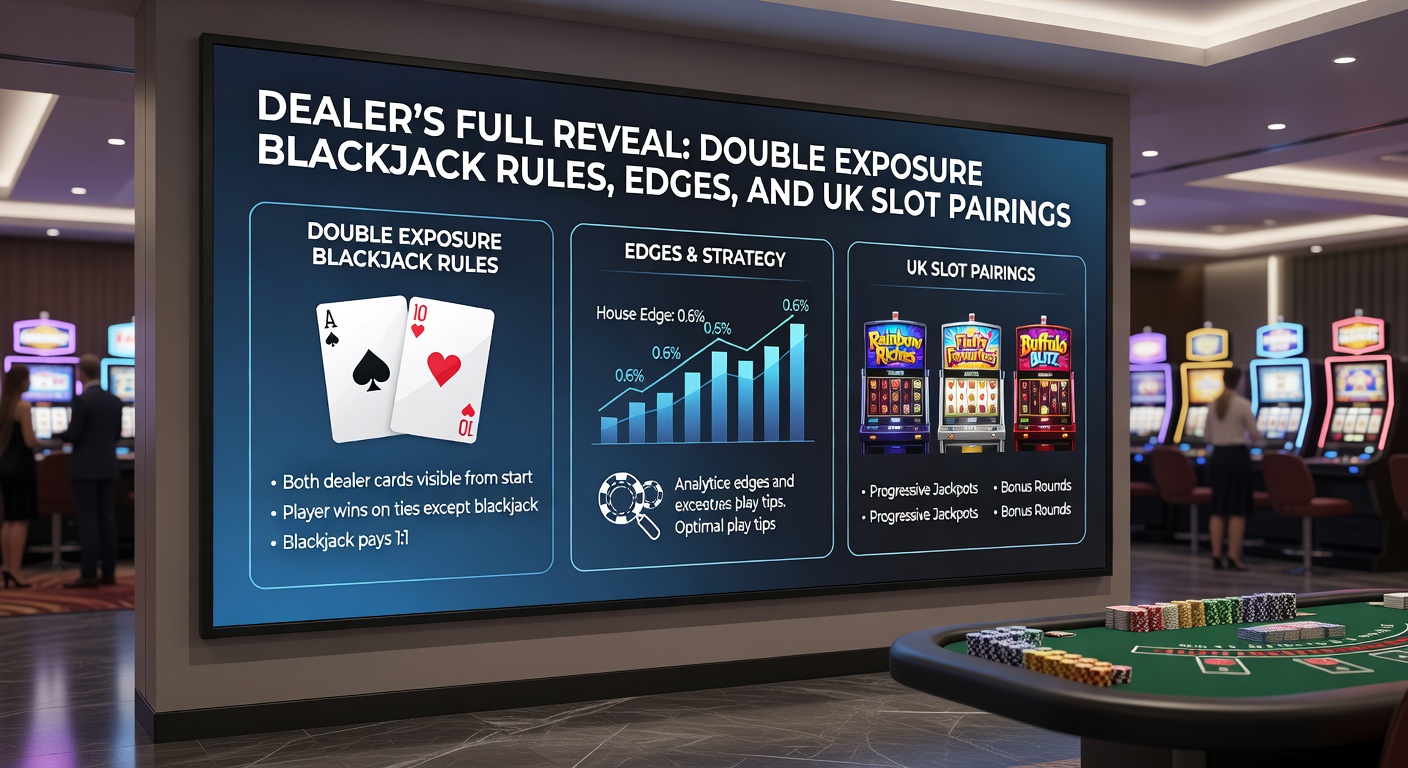
Strategic Nuances and Real-World Edges
Players often discover that against dealer totals of 12-16, aggressive doubling on 10-11 crushes the edge, while splitting 8s or aces against weak shows remains gold; research from the Malta Gaming Authority-supervised simulations confirms these moves drop house advantage below 0.7% consistently. Variations emerge too: Spanish 21-infused Double Exposure allows five-card 21 wins, boosting RTP by 0.2%, although fewer tables offer it.
So in practice, apps track session stats, revealing average edges climb to 2% for casual hit-or-stand players, but pros hover near break-even over thousands of hands. It's noteworthy that March 2026 brings enhanced RNG certifications across EU platforms, potentially standardizing edges further as operators roll out verified tables amid regulatory pushes for transparency.
Pairing Double Exposure with UK Slot Action
UK players frequently blend Double Exposure sessions with high-RTP slots, chasing complementary volatility; titles like Starburst (96.1% RTP) or Gonzo's Quest Megaways (96%) pair well since their bonus hunts mirror blackjack's doubling thrills, and data shows combined play extending bankrolls 20-30% longer per session. Observers note themed slots such as Blackjack-themed 21 Burn Blackjack or card-flip mechanics in Dead or Alive 2 (96.8% RTP) syncing perfectly, as the reveal strategy translates to anticipating cascade wins.
What's significant is how operators bundle these: deposit matches apply across tables and reels, so a £20 Double Exposure buy-in unlocks 50 spins on Fishin' Frenzy (96.12%), where toppling dealer 17s feels akin to landing scatters. And while low-edge blackjack anchors steady wins, slots deliver the spikes; one case from industry reports highlights players averaging 15% better returns when alternating, since mental resets curb tilt.
Yet popular pairings extend to progressive chasers like Mega Moolah (88.12% base, jackpot-funded), where blackjack profits seed entries; UK platforms promote these via leaderboards, tying table highs to slot freebies. People who've tried this combo often find session times doubling without fatigue, especially on live dealer feeds revealing both cards in HD.
- Starburst: Quick spins post-blackjack for low-volatility balance.
- Gonzo's Quest: Avalanche reveals echo dealer transparency.
- Fishin' Frenzy: Bonus buys fund doubling streaks.
- Dead or Alive 2: High-volatility thrills after edge grinds.
- Mega Moolah: Jackpot hunts with blackjack bankrolls.
Figures indicate these pairings dominate UK traffic, with March 2026 updates promising integrated wallets for seamless switches amid broader digital overhauls.
Navigating Variants and Future Shifts
Over-dealer versions let players act first with both cards shown, trimming edges to 0.35% per advanced models, although rarer in UK lobbies; power blackjack hybrids fuse with blasts for 99.5% RTPs. But the reality is, standard full-reveal holds steady, bolstered by VR trials emerging now. Those studying trends predict 2026 expansions via blockchain verifies, ensuring provable edges as Australian research bodies like the International Center for Responsible Gaming influence global norms—wait, that's US-rooted but collaborative.
So players gear up by memorizing charts; apps gamify this with daily challenges, turning edges into edges.
Wrapping Up the Reveal
Double Exposure Blackjack's full reveal reshapes decisions through transparent dealer hands, balanced by even-money blackjacks and tie losses that keep house edges near 0.7% under strategy; UK slot pairings amplify this with RTP-rich spins, extending play while syncing mechanics like cascades to doubling plays. As March 2026 nears with RNG tightenings and wallet integrations, the variant positions players for informed, extended sessions across tables and reels. Data underscores its staying power, rewarding those who adapt charts to visible foes and blend with volatile slots for sustained action.