From Felt to Reels: How Blackjack Decision Trees Influence Slot Selection Patterns Among UK Gamblers
Olivia Baumann · Aug 13, 2026
From Felt to Reels: How Blackjack Decision Trees Influence Slot Selection Patterns Among UK Gamblers
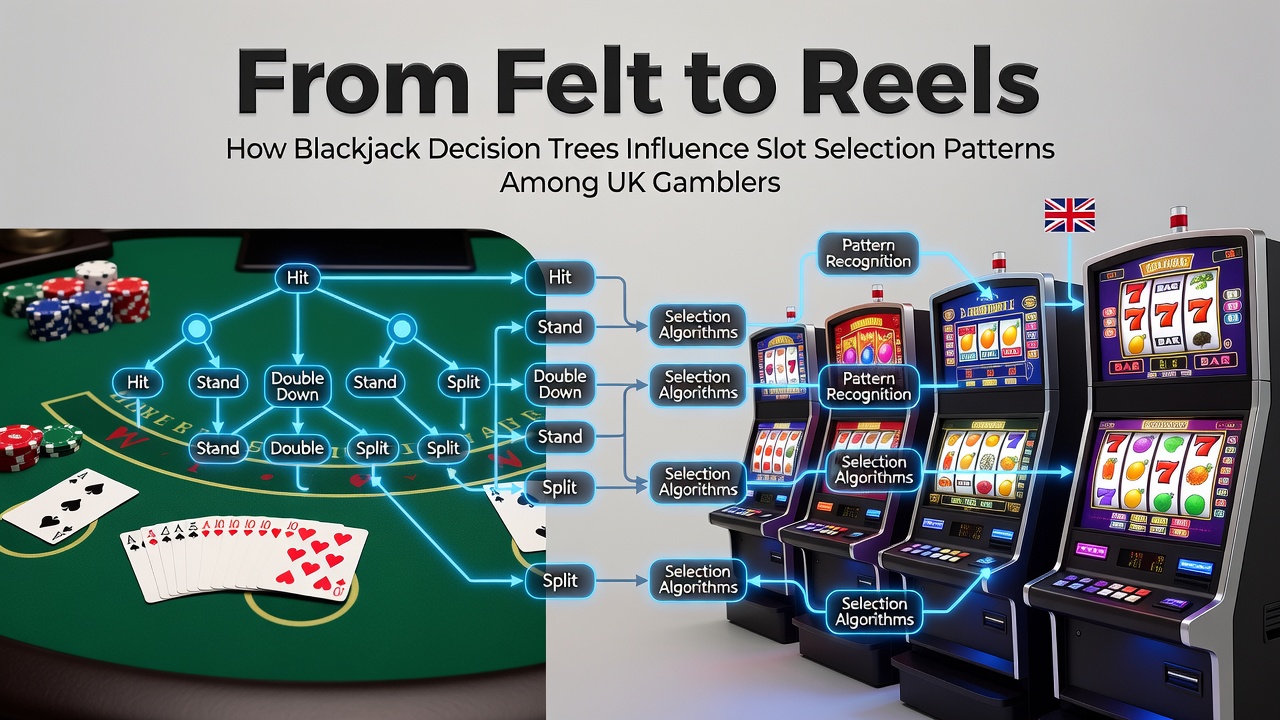
Blackjack players in the UK have long relied on decision trees to map out optimal moves based on dealer upcards and their own hands, and recent patterns show these analytical habits carrying over into slot machine choices with increasing regularity. Observers note that structured approaches developed at the tables translate into systematic evaluations of slot features such as return-to-player percentages, volatility levels, and bonus trigger frequencies. Data from multiple industry sources indicate that gamblers familiar with basic strategy charts tend to favor slots with transparent mathematical profiles over those relying purely on visual appeal or thematic elements.
Understanding Blackjack Decision Trees in Practice
Decision trees in blackjack break down every possible combination into recommended actions like hit, stand, double, or split, and players apply these frameworks during extended sessions at both land-based and online venues. Researchers at institutions such as the University of Nevada, Las Vegas have documented how repeated use of these trees sharpens probabilistic thinking, which then surfaces when the same individuals scan slot libraries. Figures from the Nevada Gaming Control Board highlight similar skill-transfer effects across table and machine games, though UK-specific tracking remains limited to aggregated operator reports.
Those who've studied player behavior observe that decision trees reduce emotional decision-making at blackjack, and the same discipline appears when gamblers filter slot options by metrics rather than chasing recent wins or popular themes. In August 2026, tracking tools provided by several major platforms revealed spikes in selections for medium-volatility titles among accounts that previously logged high volumes of blackjack play, suggesting a carryover effect from calculated table strategies.
Transfer of Analytical Habits to Slot Selection
Slot selection patterns shift noticeably once players internalize blackjack-style evaluation methods, because they begin prioritizing games with known hit rates and bonus structures over random browsing. Case studies compiled by academic groups in Canada show that participants trained on decision trees spent longer reviewing paytable details and RTP disclosures before committing stakes, a behavior mirrored in UK online environments according to anonymized session data. This methodical filtering leads to preferences for titles featuring cascading reels or multiplier ladders that echo the layered probabilities found in blackjack scenarios.
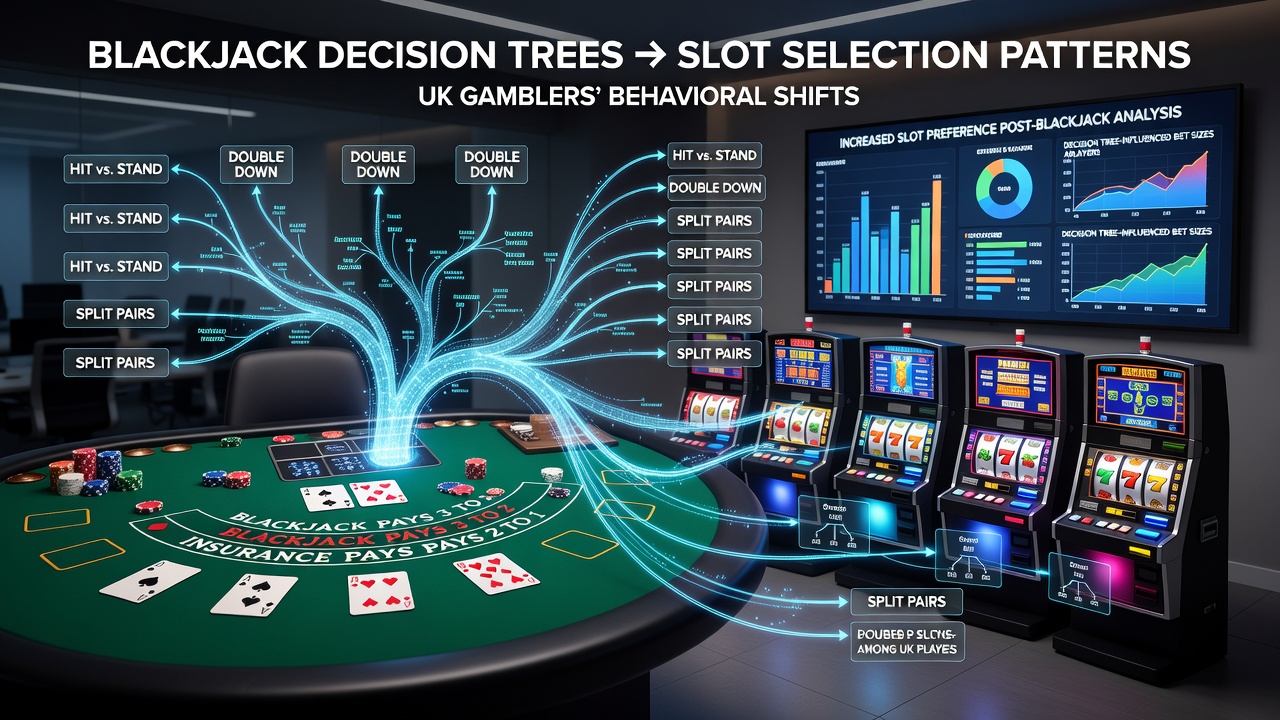
What's interesting here is how the mental models evolve: a player accustomed to weighing surrender options against expected value might apply parallel logic when comparing a slot's free-spin frequency against its base game variance. Reports from the Australian Gambling Research Centre note comparable cross-game strategy migration, where table-game veterans demonstrate higher engagement with data-rich machine interfaces. UK operators have responded by surfacing more granular statistics in game lobbies, which aligns with observed demand from this demographic segment.
Observed Patterns in UK Online Environments
Session logs analyzed across multiple platforms indicate that blackjack regulars allocate a larger share of their bankrolls to slots positioned as strategic complements rather than pure entertainment options. These choices often involve games with adjustable bet ladders that allow fine-tuning similar to blackjack stake adjustments, and bonus rounds that reward timing decisions reminiscent of insurance bets. External data compiled by the Canadian Institute for Gaming Research further supports the view that decision-tree experience correlates with longer retention on mathematically transparent titles.
Yet the influence extends beyond individual choices into broader platform navigation habits, where users apply filtering tools to isolate slots matching specific criteria developed through table play. In practice, this manifests as reduced time spent on high-volatility progressives and increased focus on steady-payout mechanics that echo blackjack's steady-state probabilities. Industry reports from the European Gaming and Betting Association document rising interest in such hybrid approaches across regulated markets, including the UK.
Conclusion
Patterns emerging from player data demonstrate that blackjack decision trees shape slot selection by instilling a preference for quantifiable elements over superficial attractions. As tracking capabilities advance through 2026 and beyond, operators and researchers continue to map these connections across UK gambling populations. The resulting insights point toward more informed engagement with both table and reel formats, driven by consistent analytical frameworks rather than isolated game preferences.