Jackpot Thresholds Reshaping Risk Protocols in Blackjack Tables
Rafael Perry · Jun 9, 2026

Jackpot Thresholds Reshaping Risk Protocols in Blackjack Tables
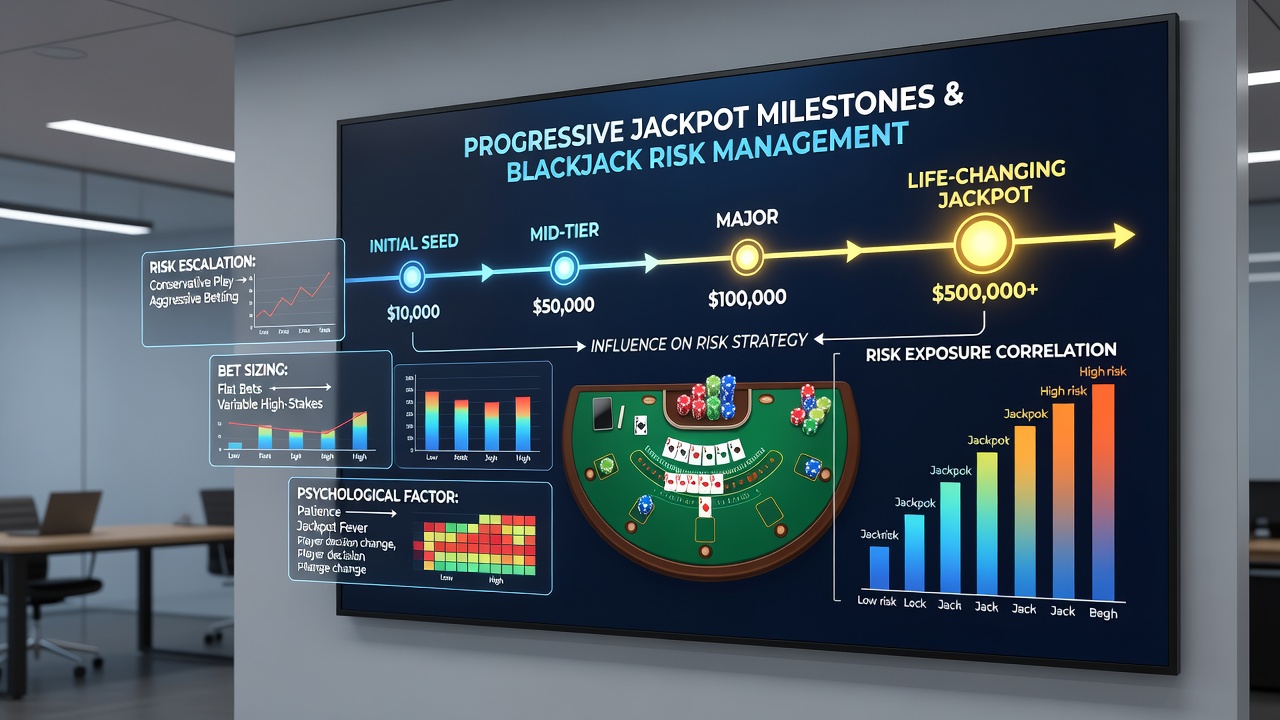
Progressive jackpot systems attached to blackjack variants have reached notable payout levels in recent years, and those benchmarks coincide with measurable adjustments in how casinos and players handle bankroll exposure. Data from multiple jurisdictions shows that once a linked jackpot crosses specific thresholds, average bet sizes at participating tables rise while session lengths shorten in documented cases.
Defining Progressive Elements in Blackjack Contexts
Blackjack itself carries fixed payout structures in standard rulesets, yet many operators integrate side bets such as Perfect Pairs or 21+3 that feed into progressive pools. When these pools accumulate across networked tables or properties, the growing totals create distinct behavioral patterns. Reports compiled by the Nevada Gaming Control Board indicate that progressive side-bet participation increases by roughly 18 percent once the displayed meter exceeds $250,000 in comparable venues.
Those same records reveal that players allocate a higher percentage of their session bankrolls to the side bet when the jackpot sits between $400,000 and $600,000. The shift occurs because the potential return on the side wager begins to offset the inherent house edge on the base game for some participants, prompting recalibration of overall risk exposure.
Milestone Effects on Player Bankroll Allocation
Research conducted by the University of Nevada, Las Vegas Center for Gaming Research tracks session data across progressive and non-progressive blackjack pits. Their analysis of 2025 floor records shows that after a jackpot milestone of $1 million is announced, the median player reduces base-game wager size by 12 percent while increasing side-bet frequency. This redistribution keeps total risk per hand roughly constant yet changes the volatility profile of the session.
Operators respond by tightening table minimums on progressive games during peak accumulation periods. Internal policy documents from several Las Vegas Strip properties indicate that minimum bets on progressive tables rise by one increment once the meter passes the $750,000 mark, a measure intended to manage aggregate liability across the network.
Operational Adjustments by Gaming Establishments
Casino risk teams monitor progressive meters in real time through centralized dashboards. When a jackpot crosses a pre-set internal threshold, automated alerts trigger reviews of table limits, dealer rotation schedules, and insurance reserve allocations. Australian gambling statistics released in early 2026 documented a similar pattern: after the $2 million milestone on a multi-state linked blackjack side bet, participating venues in New South Wales reduced maximum side-bet exposure per player by 25 percent for the subsequent 48-hour window.
These operational changes reflect actuarial modeling that treats the progressive pool as a correlated liability rather than an independent marketing feature. Actuaries factor in both the probability of a jackpot hit and the expected increase in table traffic that accompanies visible meter growth.
Regulatory Data Releases Scheduled for June 2026
Multiple oversight bodies have aligned their reporting cycles to release aggregated progressive jackpot statistics in June 2026. The resulting datasets will cover payout frequency, average time between hits, and observed changes in player risk metrics across jurisdictions. Early summaries circulated among industry analysts suggest that the forthcoming figures will highlight correlations between milestone announcements and shifts in average session standard deviation, providing operators with updated benchmarks for internal risk models.
Those models incorporate both historical payout curves and real-time meter velocity to forecast periods of elevated table volatility. When velocity exceeds modeled parameters, some properties activate temporary hold percentages on progressive contributions, effectively slowing meter growth to stabilize risk exposure.
Integration With Broader Risk Management Frameworks
Blackjack floor supervisors now receive training modules that address progressive-specific scenarios alongside traditional card-counting detection. The modules emphasize monitoring for coordinated play across multiple progressive tables, a tactic observed when large syndicates target high-meter games. Surveillance logs from 2025 cases in Atlantic City properties illustrate that such coordination attempts increased by 9 percent in the week following each publicized milestone crossing.
Software platforms used for table-game accounting have added fields that flag sessions where side-bet volume exceeds 30 percent of total action once the progressive exceeds defined thresholds. These flags feed into daily risk reports that compliance teams review before authorizing continued operation of the linked network.
Conclusion
Progressive jackpot milestones in blackjack environments generate observable shifts in both player wager distribution and operator control parameters. Data sets scheduled for release in June 2026 will supply additional granularity on these dynamics, allowing risk frameworks to incorporate meter-driven variables more precisely. The pattern remains consistent across documented jurisdictions: meter growth prompts recalibration of exposure limits, session parameters, and surveillance priorities without altering core blackjack rulesets.