Swansea Grosvenor Casino Closes Permanently After Years of Mounting Losses and Staff Redundancy Disputes
Rafael Perry · Sep 6, 2026

Swansea Grosvenor Casino Closes Permanently After Years of Mounting Losses and Staff Redundancy Disputes
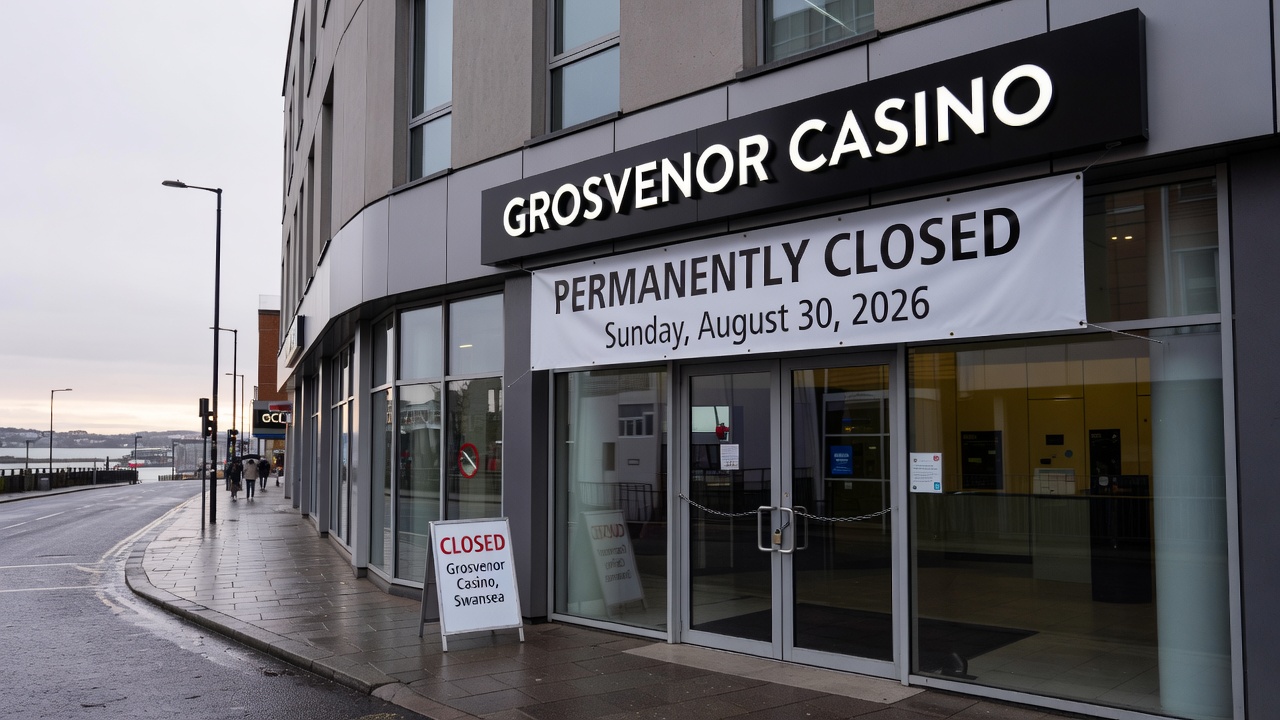
The Grosvenor Casino located on High Street in Swansea, Wales shut its doors for good on Sunday, August 30, 2026; the Rank Group, which operates the venue, cited sustained financial pressures as the reason for the permanent closure while employees raised objections over alterations to their redundancy agreement terms in the weeks that followed.
Details Surrounding the August 2026 Shutdown
Staff members learned of the decision in advance of the final operating day, and the venue ceased all gaming, hospitality and entertainment services at that point; local reports indicated that the closure marked the end of operations for a site that had served the community for many years, and by early September 2026 discussions about the practical effects on employment and the local economy continued among those affected.
Financial Performance Figures Released by the Operator
Rank Group pointed to several specific metrics from the year ending June 28 as evidence of the venue's ongoing difficulties, including an operating loss of £73,000 together with revenue that fell £635,000 short of budgeted targets; operating costs had risen 11 percent across a three-year period, and profitability at the location had declined 107 percent over the preceding decade according to company data.
Those figures illustrated a consistent downward trend that made continued operation untenable in the operator's assessment, and the company stated that the High Street property had become increasingly difficult to sustain under prevailing conditions.
Employee Concerns Over Redundancy Terms
Following the closure announcement, employees began disputing modifications to the redundancy agreement that had originally been presented; the timing of these changes drew particular attention from staff representatives who argued that the adjustments affected entitlements and payout schedules in ways that differed from earlier communications.
Observers noted that such disputes often arise when major hospitality and leisure operators reduce their physical footprint, and in this case the matter remained unresolved into September 2026 as both sides sought clarification on the final settlement packages.
Rank Group's Statement on Operational Challenges
The operator described the Swansea venue as facing structural headwinds that included higher running expenses and lower-than-expected customer spend, conditions that had persisted and intensified over the ten-year span referenced in the financial summary; Rank Group emphasized that the decision to close reflected a commercial assessment rather than any sudden external event.
Company representatives indicated that resources would be redirected toward other sites within the portfolio where performance metrics remained more favorable, a strategy observed across multiple leisure groups when individual locations no longer meet viability thresholds.
Broader Context for Physical Casino Operations
Data from industry monitoring organizations shows that many traditional high-street casinos across the United Kingdom have encountered similar cost pressures in recent years, with increases in wages, utilities and regulatory compliance contributing to tighter margins; the Swansea case aligns with patterns documented in reports from regional business analysts who track leisure-sector employment and property utilization.
One study compiled by European gaming research bodies highlighted that venues in secondary cities often experience sharper revenue volatility compared with flagship urban sites, a factor that can accelerate closure decisions when cumulative losses reach the levels recorded at the Swansea property.
Conclusion
The permanent closure of the Grosvenor Casino in Swansea on August 30, 2026 stands as a clear example of how accumulated financial shortfalls and rising operational costs can lead to the shutdown of long-standing leisure venues, while subsequent disagreements over redundancy timing underscore the human dimension of such transitions; the figures released by Rank Group provide a factual record of the venue's performance trajectory, and the ongoing dialogue between employees and management continues to shape the aftermath in the weeks following the final day of business.