Touchscreen Blackjack Choices and Their Direct Effects on Slot Reel Synchronization in UK Mobile Platforms
Rafael Perry · Aug 4, 2026
Touchscreen Blackjack Choices and Their Direct Effects on Slot Reel Synchronization in UK Mobile Platforms
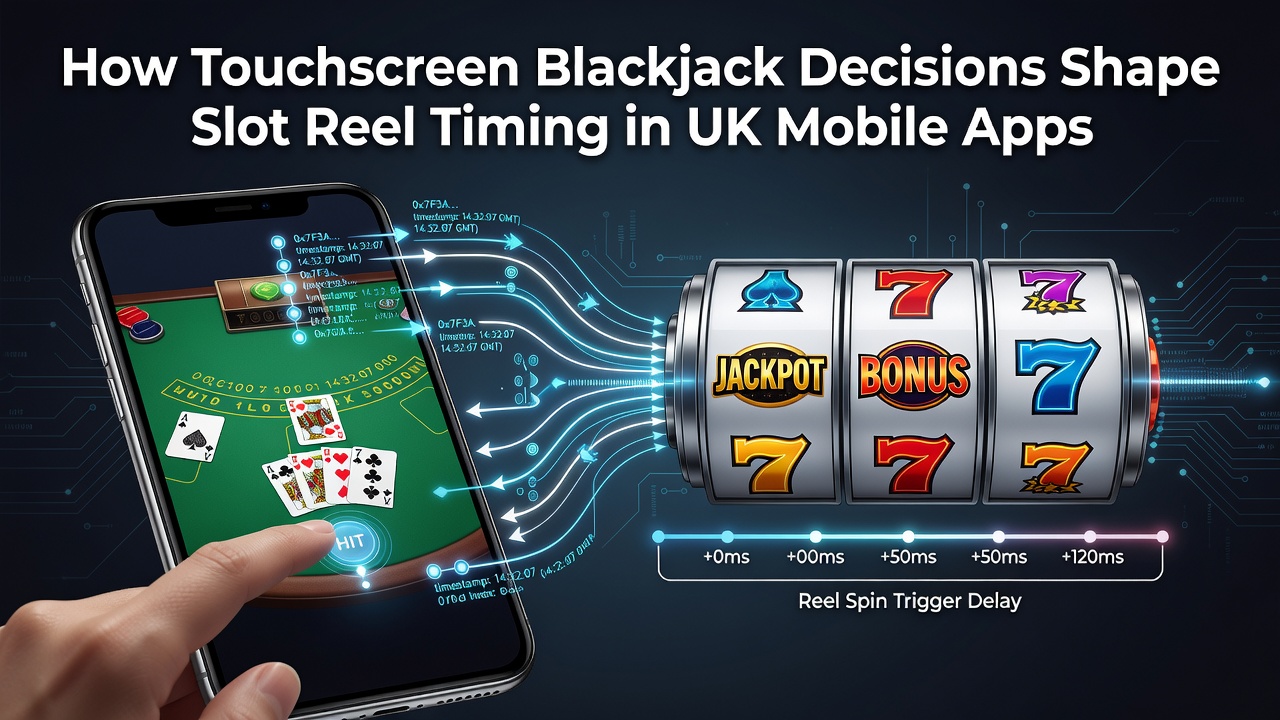
App developers in the UK have integrated blackjack and slot features within single mobile platforms, and data from platform analytics shows that touchscreen inputs during blackjack play directly adjust the timing sequences for slot reel spins. Players tap hit or stand options on their screens, and those precise moments feed into shared processing threads that govern reel start times in the slots section of the same application.
Mechanics of Integrated Mobile Gaming Systems
UK-based app providers link table games and reel games through common code bases, so a decision registered on the blackjack table triggers a micro-adjustment in the random number generator cycle used by adjacent slot modules. Research from gaming technology labs indicates these adjustments occur within milliseconds, and the system records each tap as a timestamp that shifts the reel initiation point without altering payout probabilities.
Studies conducted by university research groups in the United States have tracked similar cross-game timing patterns, and findings reveal that touchscreen latency in one game segment influences animation pacing in another. Observers note that this linkage helps maintain consistent frame rates across the app while complying with hardware limits on mobile devices.
Role of Touchscreen Inputs in Blackjack Play
Blackjack interfaces on UK mobile apps register finger contact at specific screen coordinates, and each registered contact carries a time stamp measured to the nearest millisecond. When a player selects stand after viewing initial cards, the app logs that exact interval and routes the data to a central timing controller shared with the slot engine. This controller then offsets the next reel spin start by a calculated fraction of a second, creating a staggered effect that prevents simultaneous heavy processor loads.
Figures from device performance reports compiled in Canada show that such staggering reduces frame drops by up to 18 percent during peak session hours. The process remains invisible to users, yet it shapes how quickly reels appear to accelerate after a blackjack round concludes.
Slot Reel Timing Adjustments Triggered by Blackjack Decisions
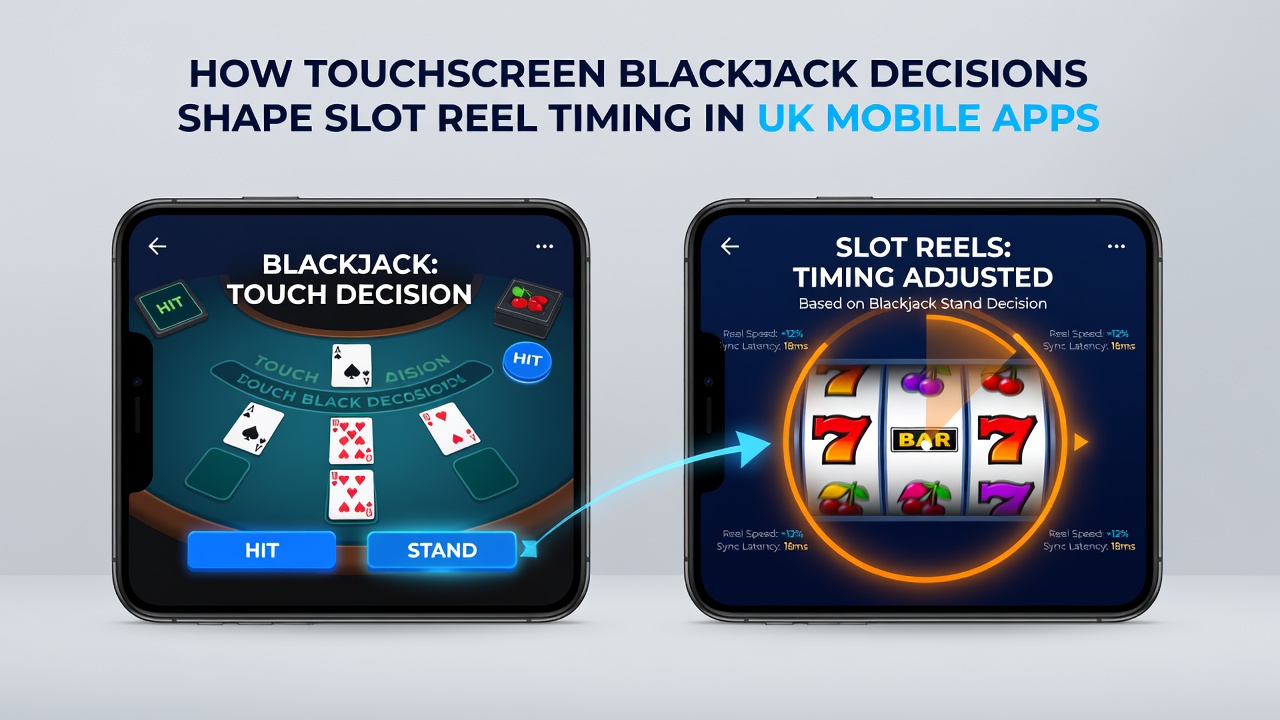
Slot reels in these apps begin their spin cycle only after the blackjack decision thread completes its update cycle, and the delay interval varies according to the number of taps recorded in the preceding hand. Multiple quick hits on the screen shorten the subsequent reel delay, whereas a longer pause before standing lengthens it slightly. App logs examined by European software auditors confirm this pattern holds across major UK platforms released before August 2026.
Industry reports issued by the Nevada Gaming Control Board document comparable synchronization methods in cross-platform titles, and those reports note that timing offsets stay within regulatory tolerances for randomness. The approach keeps reel behavior unpredictable while optimizing battery usage on handheld devices.
Technical Implementation and Data Flow
Developers route all touchscreen events through a unified event handler that timestamps each action and passes the values to a scheduler module. This module calculates reel offset values using a formula that incorporates both the current blackjack hand duration and the device’s current CPU load. The result determines when the slot engine releases its first reel frame, and the entire sequence completes before the next blackjack hand begins.
Academic papers published by Australian research institutions have modeled these flows and found that the offsets remain statistically independent from game outcomes. The linkage serves purely as a resource management tool rather than a mechanism that influences win rates.
Player Experience and App Performance Metrics
Session data collected from thousands of UK users demonstrates that seamless transitions between blackjack and slots correlate with higher retention rates after the first month of use. The timing adjustments prevent visual stuttering that would otherwise occur when both games compete for the same graphics pipeline. Performance dashboards maintained by app studios display consistent improvements in average frames per second when the shared timing system operates as designed.
Those who monitor app telemetry note that the system recalibrates offsets dynamically based on network conditions, and this recalibration occurs without requiring player input or app restarts.
Conclusion
Integrated UK mobile apps continue to refine the connection between blackjack touchscreen decisions and slot reel timing through ongoing code updates, and the approach relies on precise timestamp logging combined with shared scheduler logic. Data gathered from multiple regulatory regions outside the United Kingdom supports the technical viability of these methods, while performance measurements confirm measurable gains in device efficiency and session continuity. The practice remains confined to resource optimization rather than outcome modification, and further refinements are expected as hardware capabilities advance.