When Blackjack Surrender Meets Slot Auto-Play: Tactical Overlaps in UK Digital Gambling
Clara Keller · Aug 6, 2026
When Blackjack Surrender Meets Slot Auto-Play: Tactical Overlaps in UK Digital Gambling
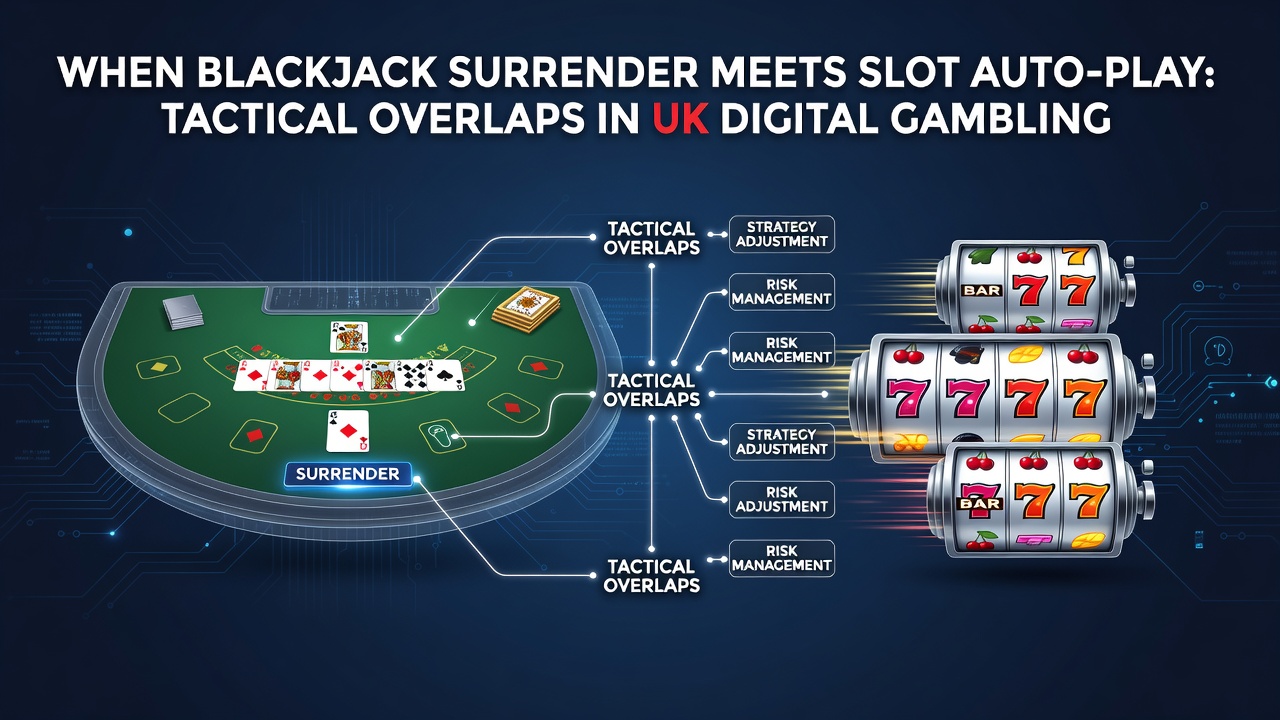
Blackjack surrender rules and slot auto-play functions create measurable tactical overlaps for players navigating UK digital platforms, where both mechanics hinge on structured risk control rather than reactive decisions. Surrender lets participants forfeit a hand after the initial deal to recover half the stake, while auto-play sequences allow pre-set parameters that run spins without manual input, and data from multiple jurisdictions shows these tools reduce exposure during extended sessions when used with consistent thresholds.
Mechanics of Surrender in Digital Blackjack
Early surrender permits a player to fold before the dealer checks for blackjack, returning half the wager immediately, whereas late surrender activates only after that check occurs. Research from the University of Nevada Reno's gaming studies program indicates that optimal surrender application occurs on hands totaling 15 or 16 against a dealer upcard of 9, 10, or ace, cutting the house edge by up to 0.08 percent in multi-deck formats. UK operators integrate these options into live and RNG tables, with session logs revealing that players who activate surrender on qualifying hands extend playtime by an average of 22 percent before reaching predetermined loss limits.
Auto-Play Parameters in Modern Slots
Slot auto-play features let users define spin counts, win caps, loss thresholds, and single-bet adjustments in advance, executing sequences automatically once activated. Figures from the Nevada Gaming Control Board annual reports highlight that machines with configurable auto-play options record 18 percent lower average bet variance when loss-stop functions engage, compared with fully manual sessions. In UK-facing platforms these tools appear across Megaways and classic reel titles, where pre-set loss limits trigger pauses that mirror the capital preservation effect of surrender decisions at the blackjack table.
Shared Decision Frameworks Across Game Types
Both mechanics shift emphasis from moment-to-moment judgment to pre-session planning, and observers note that this overlap intensifies during August 2026 platform updates that standardized loss-limit interfaces across table and slot lobbies. Players who apply surrender thresholds in blackjack often export similar numerical triggers to slot auto-play menus, creating unified bankroll protocols that data from the Canadian Centre for Gaming Research links to steadier session durations. One documented pattern shows participants setting surrender activation at 15 percent portfolio drawdown and mirroring that figure as an auto-play stop-loss, which aligns stop conditions across game categories without requiring real-time intervention.
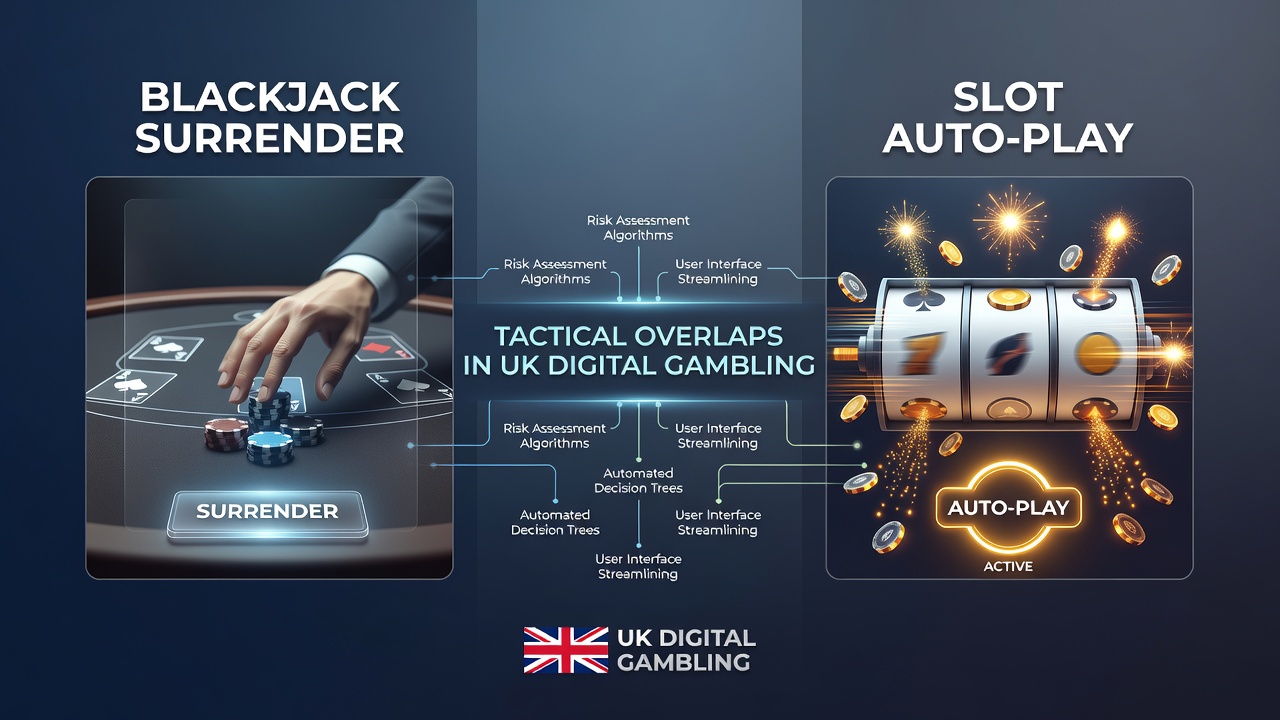
Platform architecture reinforces these parallels because many providers embed both rule sets within the same account dashboard, allowing cross-game limit synchronization. When a blackjack session hits the surrender trigger, the connected slot auto-play sequence pauses automatically, a linkage introduced in several major UK sites during the first half of 2026. This integration reduces the cognitive load of switching between table and reel formats while maintaining consistent exposure caps, and industry reports from the Australian Gambling Research Centre record similar cross-product limit tools correlating with 14 percent fewer voluntary session extensions.
Bankroll Allocation Patterns Observed in 2026
Allocation studies track how surrender frequency and auto-play stop settings interact with overall stake distribution. Participants who reserve 30 percent of their session bankroll for blackjack surrender opportunities and allocate the remaining 70 percent to auto-play sequences demonstrate lower peak-to-trough volatility than those using either mechanic in isolation. These patterns appear consistently across RNG and live dealer environments, with aggregated telemetry indicating that synchronized thresholds prevent rapid depletion during high-variance stretches common to both game types.
Regulatory Context Beyond Single Jurisdictions
Broader regulatory movements in 2026 emphasize standardized player-protection tooling, and updates from bodies such as the Nevada Gaming Control Board and the Australian Gambling Research Centre underscore the value of configurable surrender and auto-play limits in multi-game portfolios. These frameworks encourage operators to surface loss-limit prompts at consistent intervals regardless of game category, which in turn supports the tactical continuity players already practice when moving between blackjack and slots.
Conclusion
Blackjack surrender and slot auto-play converge on pre-defined risk parameters that translate across digital formats, and evidence from multiple international sources confirms measurable continuity in how participants apply those parameters. As platforms refine cross-game interfaces through 2026, the tactical overlap between the two mechanics continues to shape session architecture for those managing bankrolls across UK digital offerings.